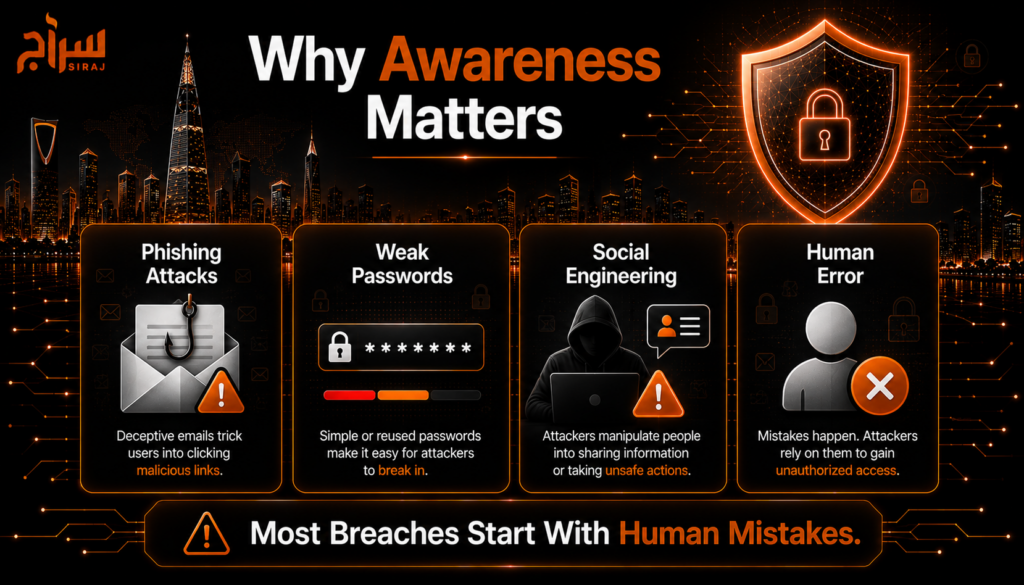
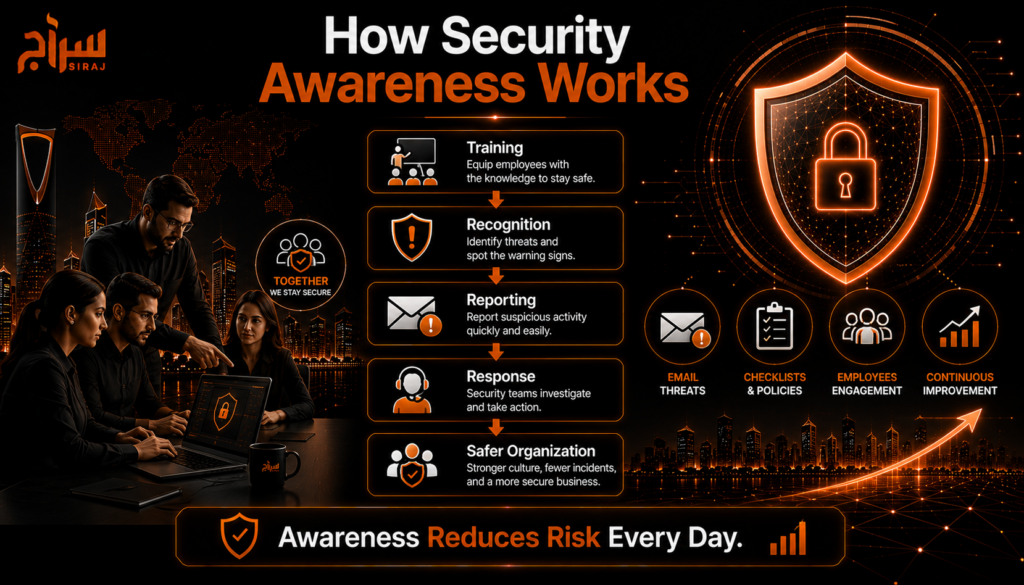
Every serious analysis of how breaches actually happen arrives at the same uncomfortable conclusion: the majority start with a person, not a piece of malware defeating a firewall. Someone clicks a convincing phishing link, someone reuses a password across a compromised third-party site, someone approves a wire transfer because the request sounded urgent and came from what looked like the CEO. No firewall, antivirus, or intrusion prevention system prevents any of these — they happen entirely within the space that technical controls don’t cover: human judgment under normal working pressure.
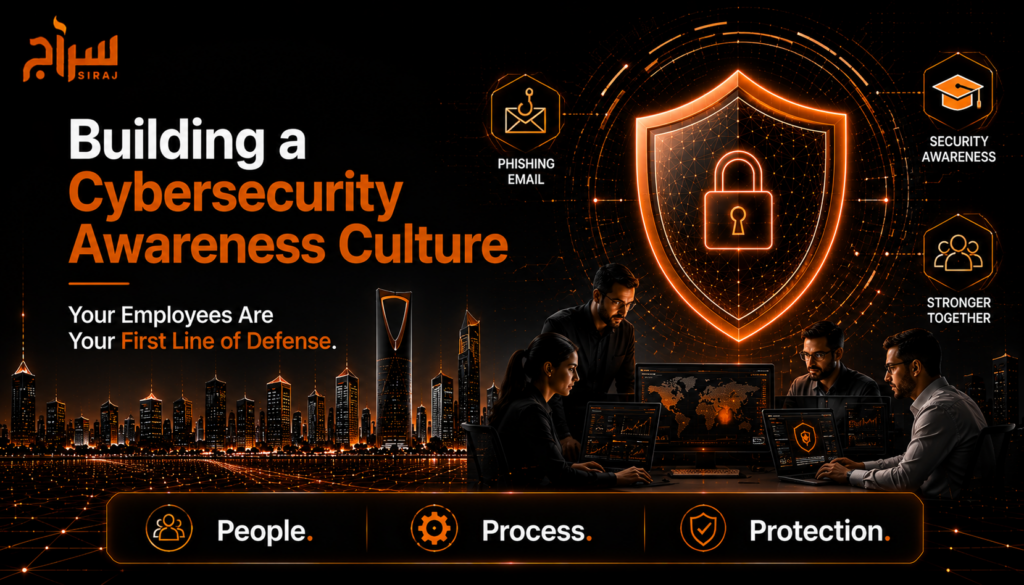
Why “We Did a Training Session” Isn’t Awareness Culture
Most organizations that believe they’ve addressed this have done exactly one thing: an annual training session, often a slideshow or a generic e-learning module employees click through as quickly as possible to satisfy a compliance checkbox. This produces measurable *completion rates* and almost no measurable change in actual behavior, because awareness that isn’t reinforced fades within weeks — the same way any one-time training does, in any field.
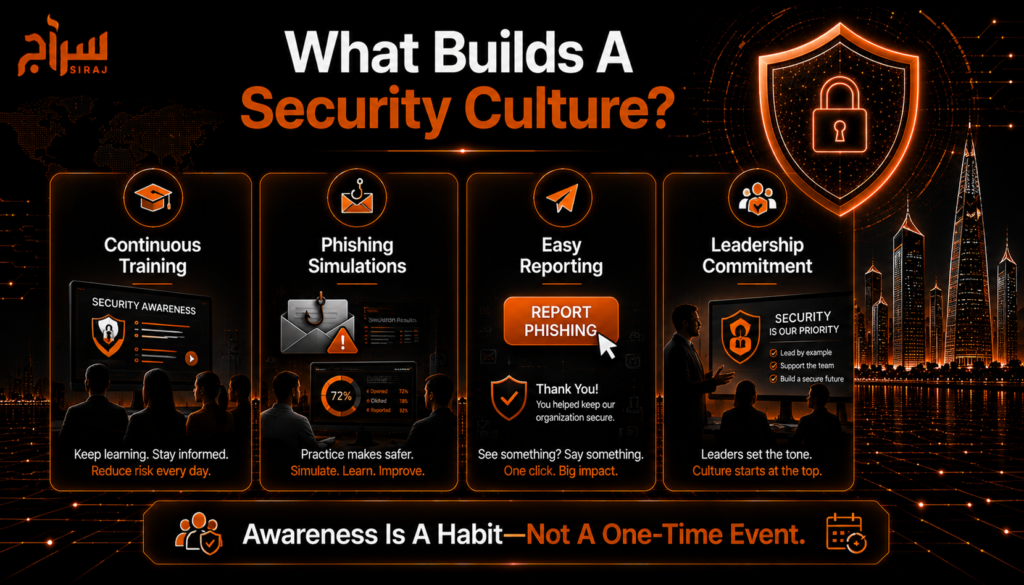
A genuine security-aware culture looks different: security is discussed regularly, not annually; realistic scenarios are practiced, not just described; and reporting a suspicious email is treated as a positive action to reward, not something staff avoid out of fear of looking foolish.
What Actually Changes Behavior
**Simulated phishing campaigns, run regularly, not once.** Sending realistic (but harmless) simulated phishing emails and tracking who clicks gives you an honest measurement of actual risk — not self-reported confidence. More importantly, run consistently (monthly or quarterly, not annually), simulations build a habit of pausing before clicking, which is the actual behavior you want, not just short-term awareness of one specific campaign.
**Immediate, blame-free feedback.** When someone clicks a simulated phishing email, the moment right after — while it’s fresh — is the highest-value teaching opportunity available. A short, specific explanation of what gave the email away, delivered without shaming the employee, turns a near-miss into a genuine learning moment rather than an embarrassment people quietly avoid discussing.
**Making reporting effortless and rewarded.** If reporting a suspicious email requires five steps and gets no acknowledgment, people stop bothering. A one-click “report phishing” button, paired with a quick thank-you response (even automated), keeps the reporting habit alive — and gives your security team real, current visibility into what’s actually landing in inboxes.
**Leadership visibly participating, not just mandating.** A training program that executives are exempt from (or quietly skip) sends a clear message about how seriously the organization actually treats it, regardless of what the official policy says. Executives — often the highest-value BEC impersonation targets — completing the same simulations and training as everyone else is both good security practice and a strong cultural signal.
The Specific Scenarios Worth Training For
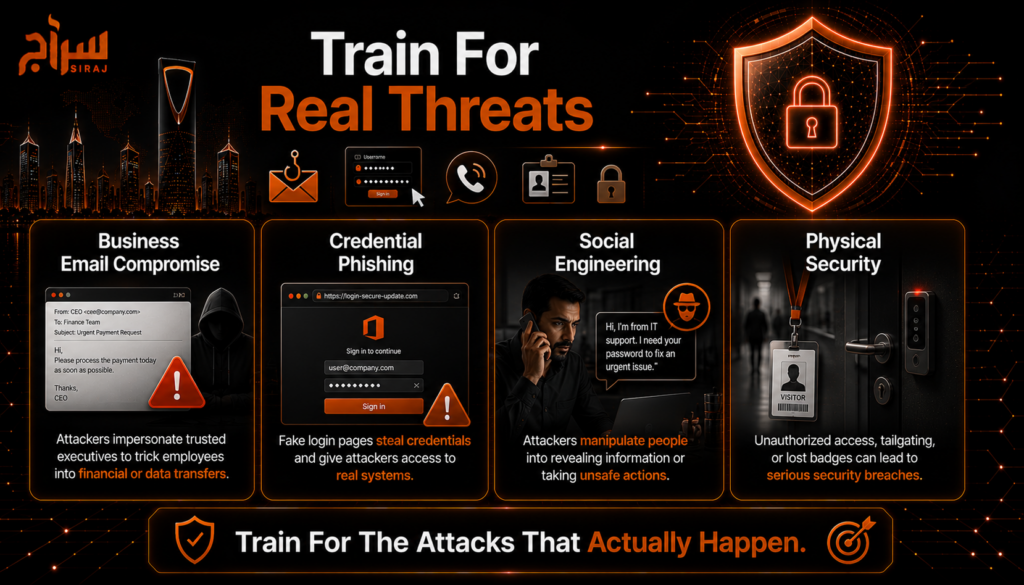
Generic “don’t click suspicious links” training under-prepares staff for how attacks actually look in practice. More effective awareness programs train specifically for:
– **Business Email Compromise patterns** — urgent executive requests, vendor bank-detail change notices, and the callback-verification habit that stops them (see our dedicated guide on protecting against BEC for the specific mechanics)
– **Credential phishing that mimics real internal tools** — a fake Microsoft 365 login page is far more effective than an obviously foreign scam email, and staff need to recognize the specific tells (URL mismatches, unusual login prompts)
– **Physical and social engineering tactics** — a caller claiming to be IT support requesting a password, or someone attempting to badge into a secure area behind an employee (“tailgating”) — threats that live entirely outside the inbox
Measuring Whether It’s Actually Working
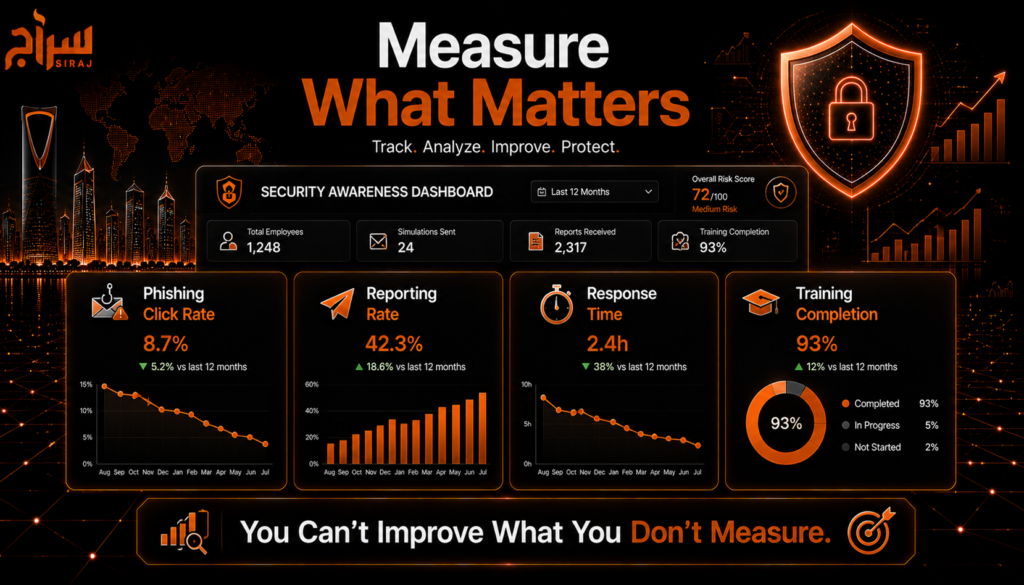
A security awareness program without measurement is just an activity, not a program. Meaningful metrics include phishing simulation click rates over time (trending down is the goal, not a single good result), reporting rates (trending up, alongside falling click rates, indicates genuine improvement rather than just fewer simulations being sent), and time-to-report for actual suspicious emails encountered in real inboxes.
Why This Matters for Compliance, Not Just Risk
For Saudi businesses pursuing Aramco CCC certification or NCA ECC alignment, documented, current security awareness training with completion tracking is a standard evidence requirement — and it’s one of the most common gap findings during audits specifically because organizations treat it as a one-time box to check rather than an ongoing program with real records to show.
Building the Human Firewall
Technical controls and a security-aware culture aren’t competing priorities — they’re complementary layers, and neither one compensates for a serious gap in the other. A well-configured firewall doesn’t stop a wire transfer approved because someone trusted an urgent-sounding email; a well-trained, security-aware team doesn’t stop a genuinely sophisticated technical exploit. Building both, deliberately and continuously, is what actually reduces real-world breach risk — not either one in isolation.
—
**Want to build a real, measurable security awareness program instead of an annual checkbox?** [Book a free consultation with SirajTech →](/contact)