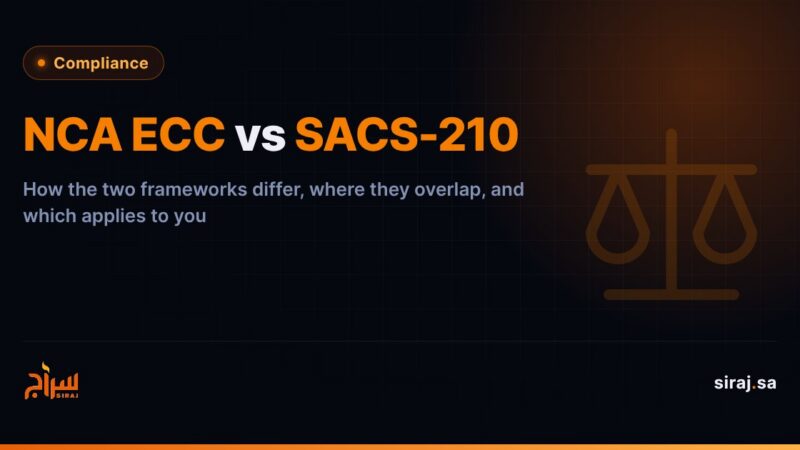
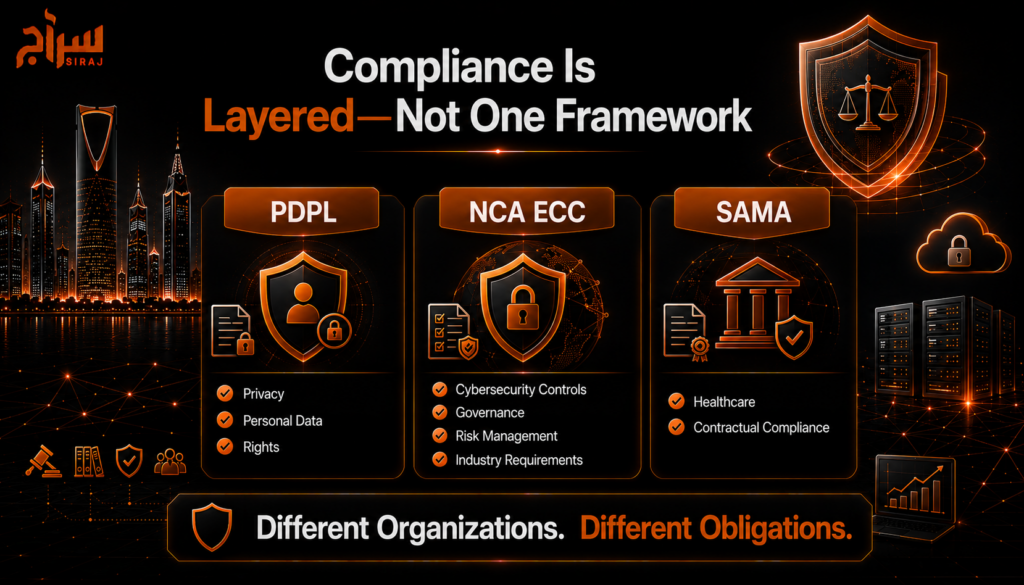
Compliance in Saudi Arabia often gets discussed as a single, monolithic requirement — “we need to be compliant” — when in reality it’s a layered set of distinct obligations that apply differently depending on your sector, your data, and who you do business with. Understanding which requirements actually apply to your organization, rather than treating “compliance” as one undifferentiated project, is the first real step toward getting it right.
PDPL: The Foundation Almost Every Business Needs
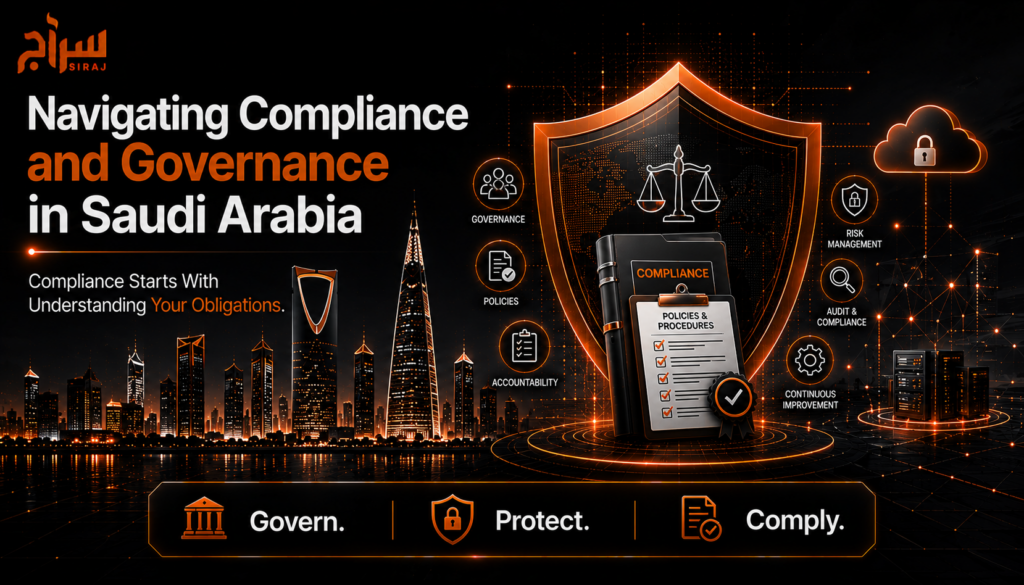
The Personal Data Protection Law (PDPL), enforced by the [Saudi Data & AI Authority SDAIA https://sdaia.gov.sa, is the Kingdom’s core data protection regulation — and unlike sector-specific frameworks, it applies broadly to essentially any organization that processes personal data of individuals in Saudi Arabia, regardless of industry.
Core PDPL obligations include:
– **A documented legal basis for processing personal data** — consent, contractual necessity, or another recognized basis, not just “we’ve always collected this information.”
– **Data subject rights** — individuals have the right to access, correct, and in many cases request deletion of their personal data, and the organization needs an actual process to honor these requests, not just a policy stating they exist.
– **Data breach notification obligations** — a defined process and timeline for notifying both SDAIA and affected individuals when a breach involving personal data occurs.
– **Cross-border data transfer restrictions** — transferring personal data outside Saudi Arabia carries specific conditions under PDPL, relevant to any business using cloud services or vendors hosted abroad.
– **A named point of accountability** — many organizations appoint a Data Protection Officer or equivalent role responsible for PDPL compliance, similar in spirit to GDPR’s DPO requirement.
Governance: The Structure Behind the Policies
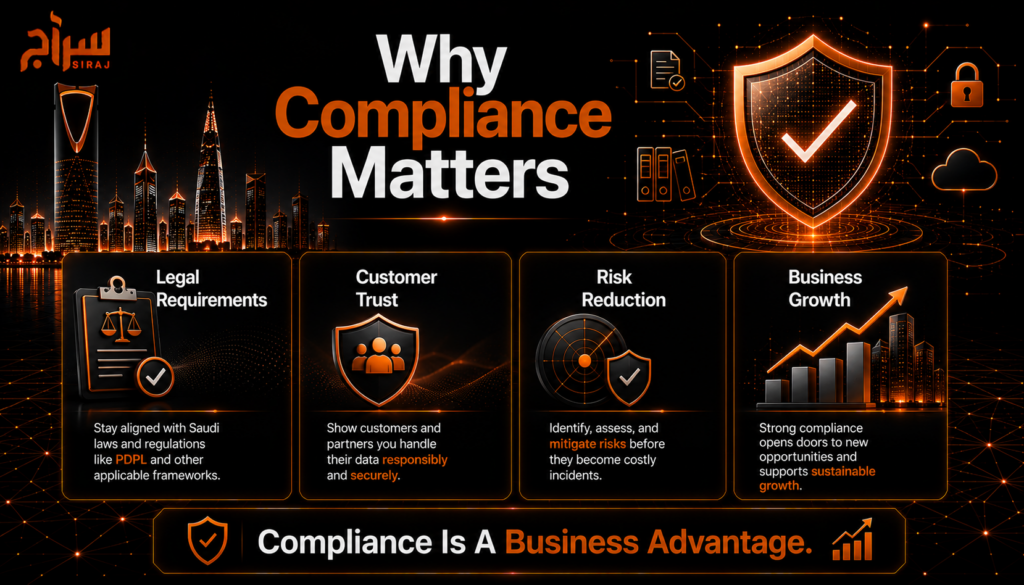
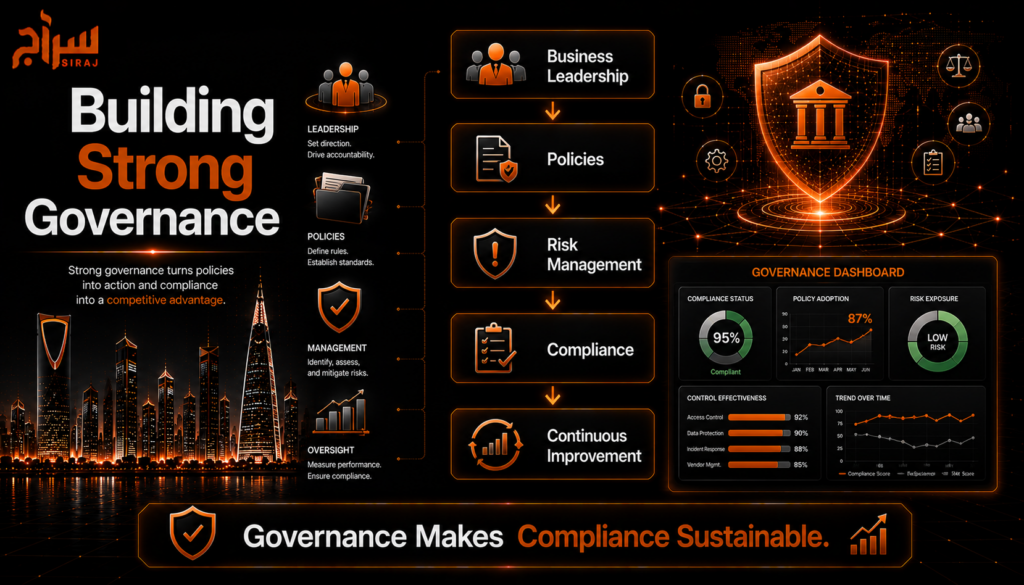
“Governance” in a cybersecurity and compliance context means the organizational structure that makes policies actually function — who owns which decisions, how risk gets assessed and reported, and how the organization demonstrates (not just claims) that its stated policies reflect real practice. This is the piece most SMEs underinvest in relative to technical controls, and it’s also the piece that auditors probe hardest, because a policy document without real governance behind it is the single most common gap finding across NCA ECC, CCC, and PDPL reviews alike.
Practical governance building blocks:
– **Named ownership** — a specific person (not “the IT department” generically) accountable for cybersecurity and data protection decisions, with the authority to actually make them.
– **A documented risk assessment process**, reviewed on a real cadence, not written once and never revisited.
– **Board or leadership-level visibility** into cybersecurity and compliance posture — treating it as a business risk topic, not purely a technical one delegated entirely to IT.
– **Regular internal audits or reviews** that test whether documented policies match actual practice — the same gap the original SirajTech digital audit process is designed to catch.
How PDPL Interacts With Sector-Specific Requirements
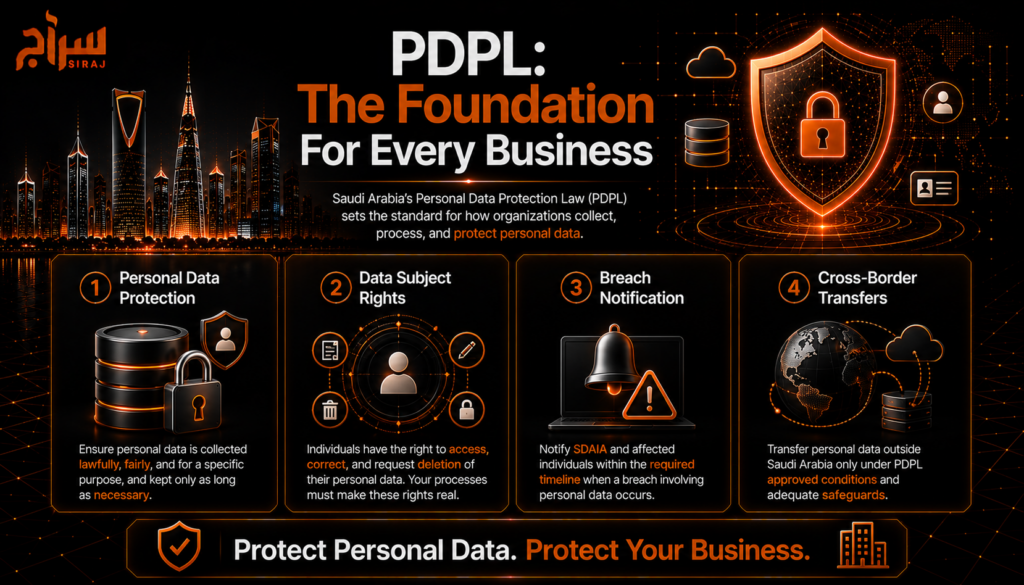
PDPL is the baseline, not the ceiling. Depending on your sector, additional requirements layer on top:
– **Financial services** face additional regulatory requirements from SAMA (Saudi Central Bank) around data security and operational resilience.
– **Healthcare organizations** handle particularly sensitive personal data under PDPL’s heightened protections for special categories of data.
– **Aramco vendors and contractors** face the CCC/SACS-210 certification requirement as a contractual, not regulatory, obligation layered on top of whatever else applies (see our dedicated guide on Aramco CCC certification for that specific process).
– **Government-adjacent and critical infrastructure organizations** typically need NCA’s Essential Cybersecurity Controls alignment as well (see our dedicated NCA ECC vs SACS-210 comparison for how that framework relates to Aramco’s vendor-specific standard).
Layering these correctly — rather than treating compliance as one generic project — is what determines whether a compliance program is actually complete or has quiet gaps specific to your sector.
Common Governance Mistakes We See
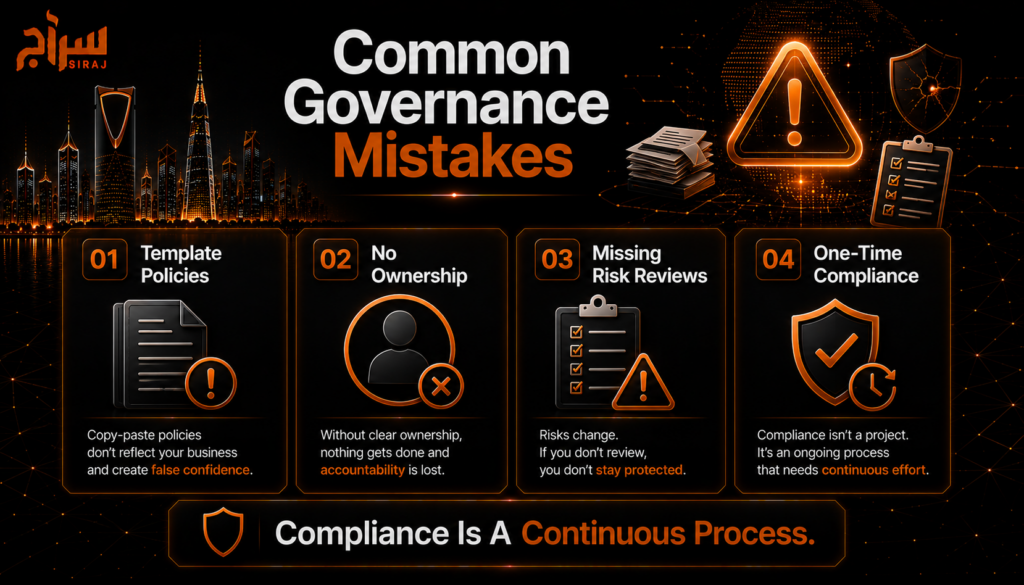
**Policies copied from a template and never adapted.** A generic privacy policy or security policy that doesn’t reflect your organization’s actual data flows and processing activities won’t hold up under a real review — and often contradicts what your systems actually do.
**No real incident response ownership.** Having an incident response *document* isn’t the same as having a genuinely rehearsed process with clear ownership — this gap surfaces exactly when it matters most, during a real incident.
**Compliance treated as a one-time project rather than an ongoing program.** Regulations and standards evolve; a compliance posture that was correct when it was built and never revisited quietly drifts out of alignment over time, often without anyone noticing until an audit or incident exposes it.
Where to Start
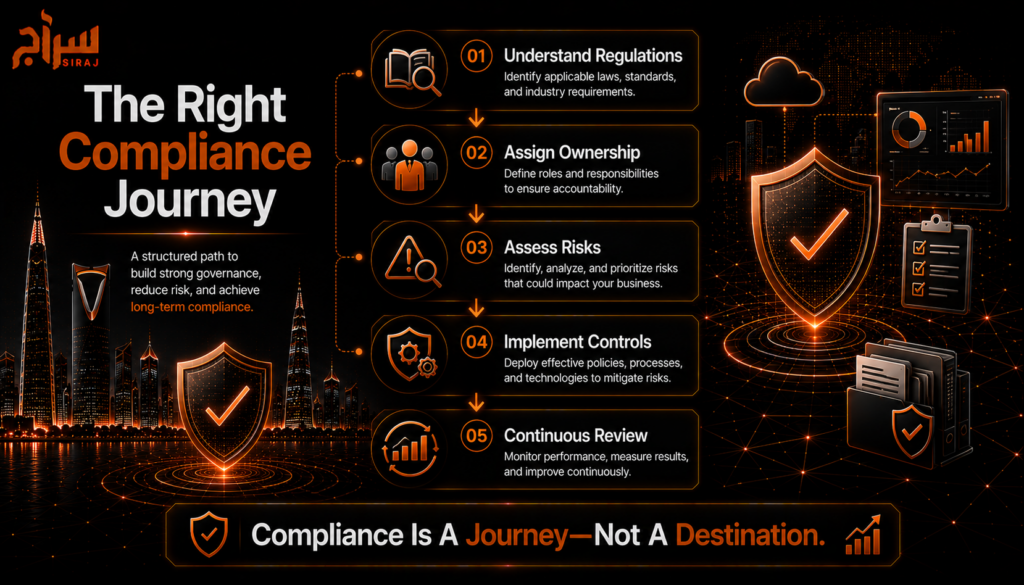
For most Saudi SMEs without a dedicated compliance function, the practical starting sequence is: confirm your PDPL obligations and appoint clear ownership for them, assess whether any sector-specific or contractual requirements (SAMA, CCC, NCA ECC) also apply to your business, and build a genuine governance structure — named accountability, a real risk assessment cadence, and periodic internal review — around whichever combination applies. Getting this sequence right the first time is significantly less costly than retrofitting governance after a gap has already caused a problem.
—
**Not sure which compliance frameworks actually apply to your business?** [Book a free compliance scoping consultation with SirajTech →](/contact)