
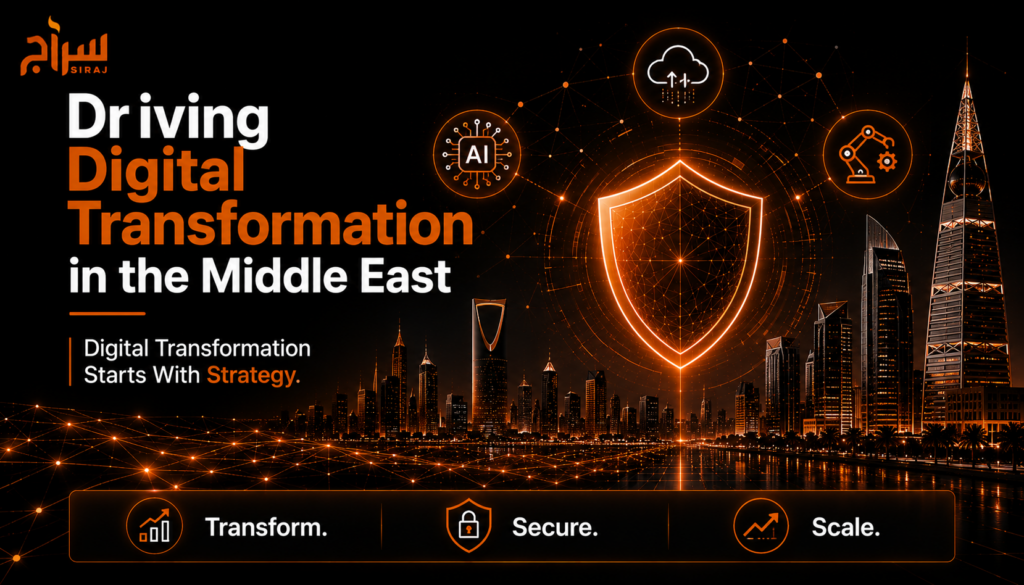
Analysts such as [Gartner] (https://www.gartner.com) track this trend closely, but digital transformation has been a business buzzword for long enough that it’s worth asking a more honest question: what does it actually mean for a mid-sized Saudi business in 2026, beyond the slide-deck language? Stripped of the jargon, it means moving core business processes — customer service, operations, finance, communication — onto digital systems that are faster, more measurable, and more scalable than the manual or paper-based versions they replace. The Middle East, and Saudi Arabia specifically, is moving through this shift faster than most regions, driven by both government digital initiatives and genuine competitive pressure.
What’s Actually Driving the Pace in Saudi Arabia
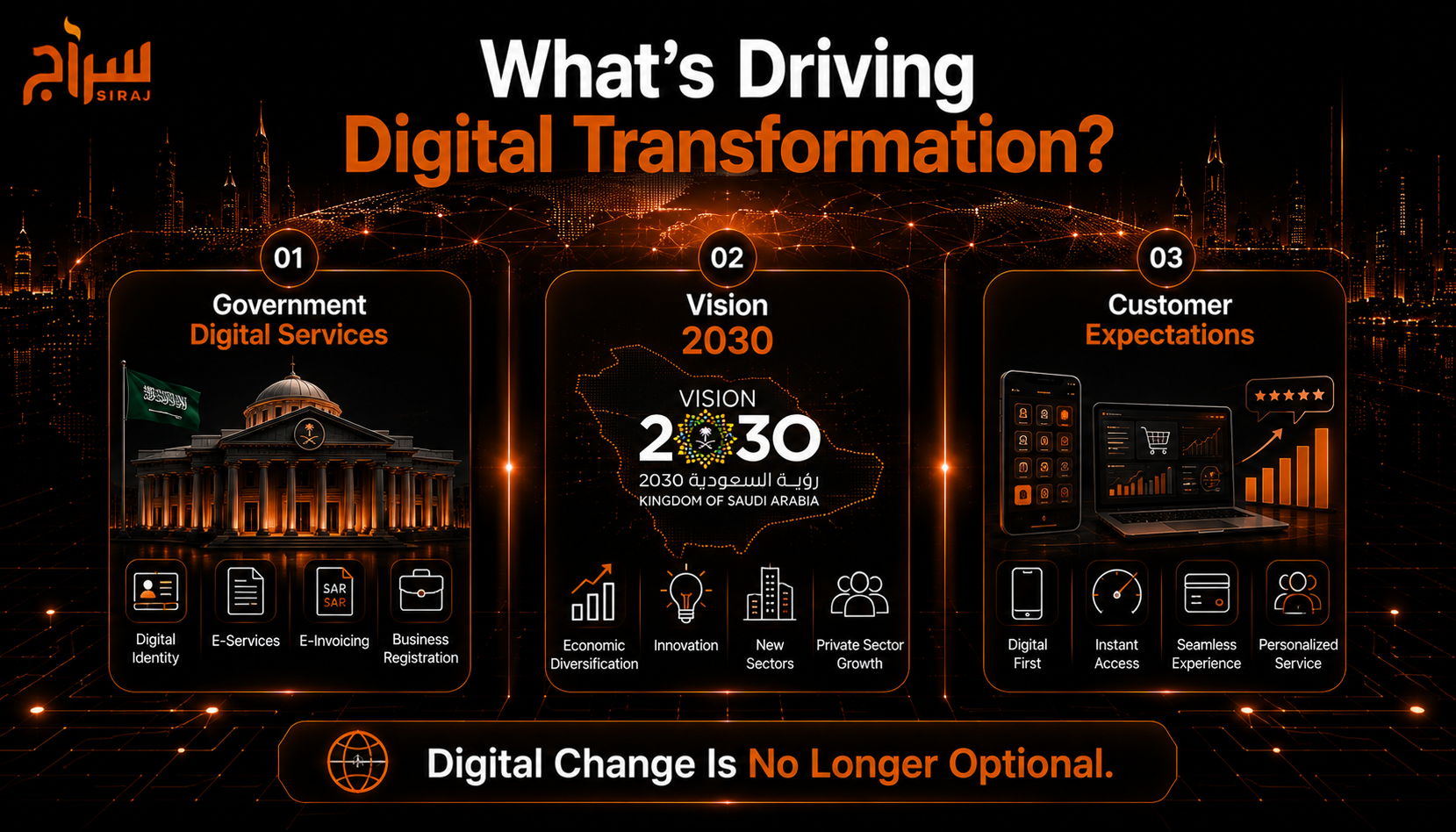
Three forces are compounding rather than working independently:
– **Government-led digitization** — Saudi Arabia’s push toward digital government services (Absher, digital business registration, e-invoicing requirements from ZATCA) means businesses increasingly *have to* operate digitally to interact with government and regulatory systems at all, not just as a competitive choice.
– **Vision 2030’s broader economic diversification** — as new sectors (tourism, entertainment, logistics, advanced manufacturing) grow alongside traditional oil-and-gas-adjacent business, many of these newer sectors are digital-native from the start, raising the baseline expectation for every business competing alongside them.
– **Consumer and B2B buyer expectations** — increasingly shaped by global digital experiences, meaning even traditional Saudi SMEs face customers who expect online booking, digital payment, and fast digital communication as a baseline, not a differentiator.
Common Digital Transformation Priorities for Saudi SMEs
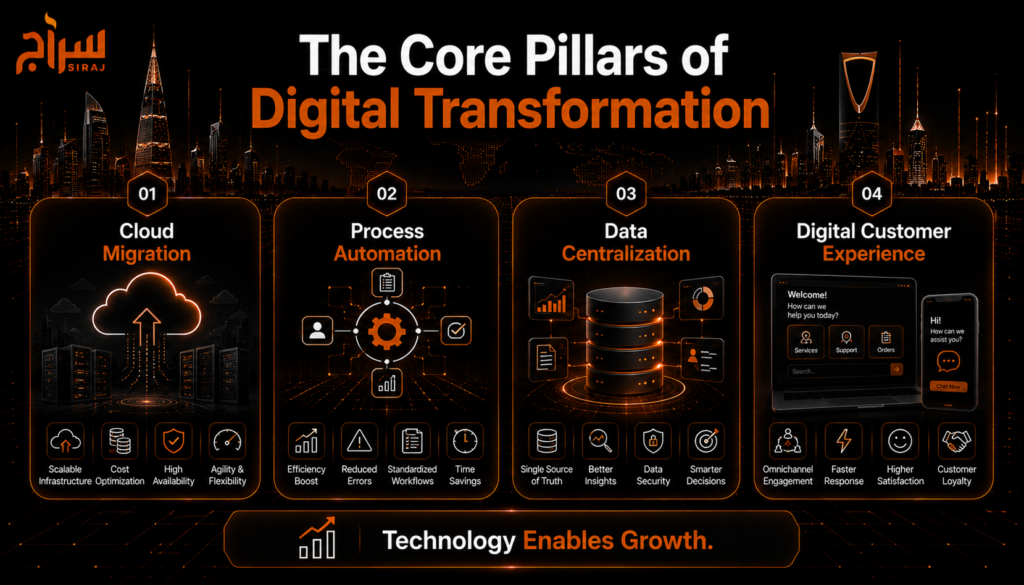
Cloud migration is usually the foundational move — shifting core business applications, file storage, and communication tools off aging on-premises infrastructure and onto cloud platforms that scale on demand and don’t require an internal team to maintain physical servers. From there, most businesses layer in:
– **Process automation** — replacing manual, repetitive workflows (invoice processing, approval chains, customer onboarding) with automated systems that reduce both labor cost and human error
– **Data centralization** — consolidating scattered spreadsheets and disconnected systems into a shared, single source of truth that different departments can actually work from consistently
– **Digital customer engagement** — moving customer interaction from phone-and-paper toward digital channels (WhatsApp Business, online booking, digital invoicing) that match how Saudi consumers and B2B buyers increasingly prefer to interact
The Part Most Transformation Plans Skip: Security By Design
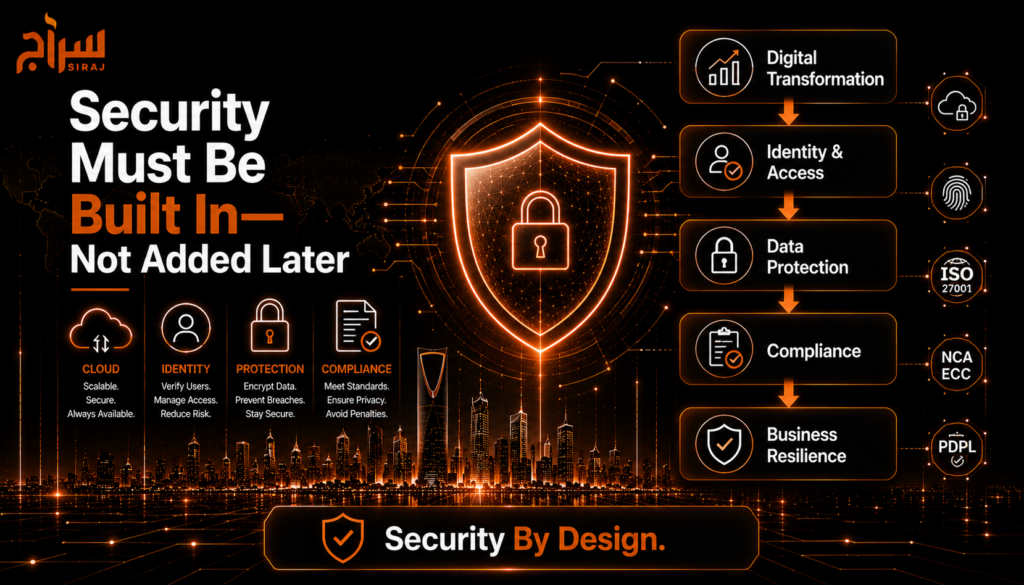
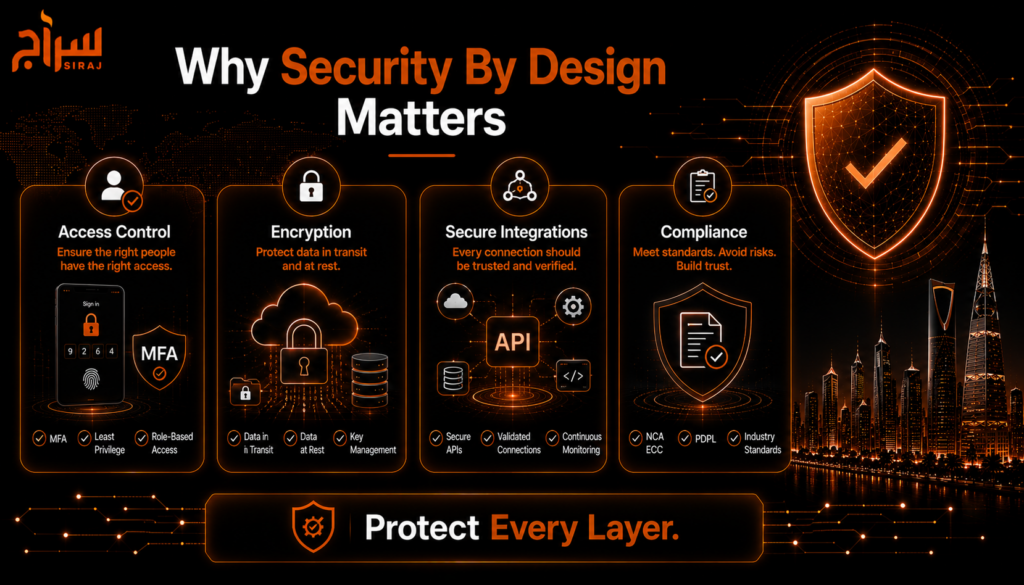
Here’s where digital transformation projects most commonly go wrong: security gets treated as a follow-up task, addressed after the new digital systems are already live and generating revenue, rather than being designed in from the start. This ordering matters enormously in practice. A cloud migration completed without proper access controls, a new customer-facing digital portal launched without basic input validation and data protection, an automation workflow that moves sensitive data through an unsecured integration — these aren’t hypothetical risks, they’re the specific, recurring pattern behind a large share of the breaches affecting newly-digitized businesses.
Building security into a digital transformation plan from day one means:
– **Access control and identity management** designed alongside the new systems, not retrofitted afterward
– **Data protection requirements** (encryption, retention, PDPL compliance) considered during system selection, not discovered as a gap during a later compliance review
– **Vendor and integration security** vetted before connecting a new cloud tool to existing business systems, since every integration is a new potential access path into your data
Why This Matters More for Saudi Businesses Specifically
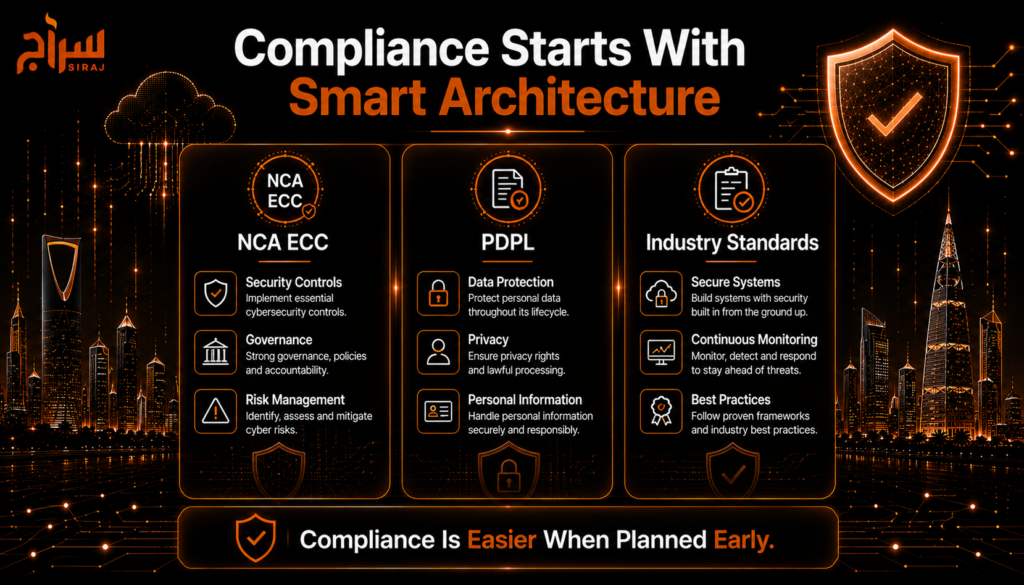
Beyond the general case for security-by-design, Saudi businesses face a specific compliance dimension that makes retrofitted security especially costly: NCA’s Essential Cybersecurity Controls, PDPL data protection requirements, and — for Aramco vendors — CCC/SACS-002-210 certification all expect the underlying digital systems to have been built with these controls in mind. A digital transformation project that ignores this during planning frequently means a second, disruptive project later just to bring the newly-built systems into compliance — effort and cost that a security-by-design approach from the start would have avoided entirely.
Getting the Sequence Right
The businesses that get the most value out of digital transformation aren’t necessarily the ones moving fastest — they’re the ones sequencing the work correctly: understanding what to digitize and why before choosing tools, building security and compliance requirements into the selection and design process rather than after, and treating the shift as an ongoing capability rather than a single completed project. Digital transformation done this way compounds in value over time; done as a rushed, security-as-an-afterthought sprint, it frequently creates as many new risks as it solves old inefficiencies.
—
**Planning a digital transformation initiative and want security built in from the start, not bolted on later?** [Book a free consultation with SirajTech →](/contact)