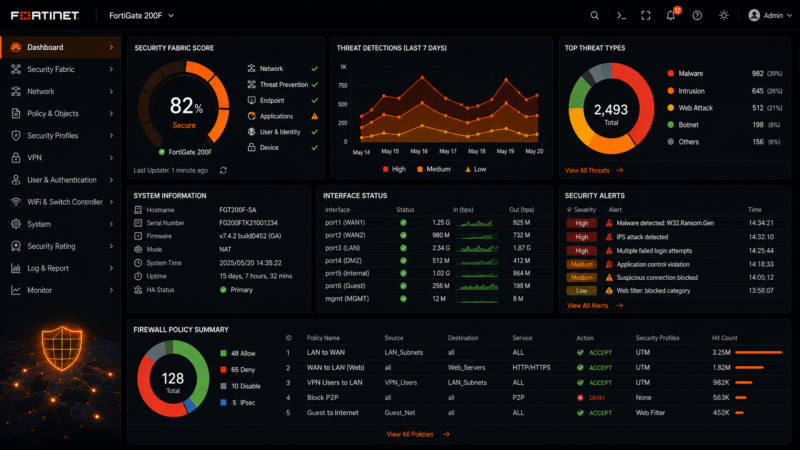
For years, “network security” meant one thing: a firewall at the edge, keeping the bad traffic out and the good traffic in. That model assumed a clear boundary between “inside” (trusted) and “outside” (untrusted). Remote work, cloud services, and mobile devices erased that boundary years ago — yet a surprising number of Saudi businesses still run their network security program as if it still exists. Here’s what a genuinely modern strategy looks like in 2026.
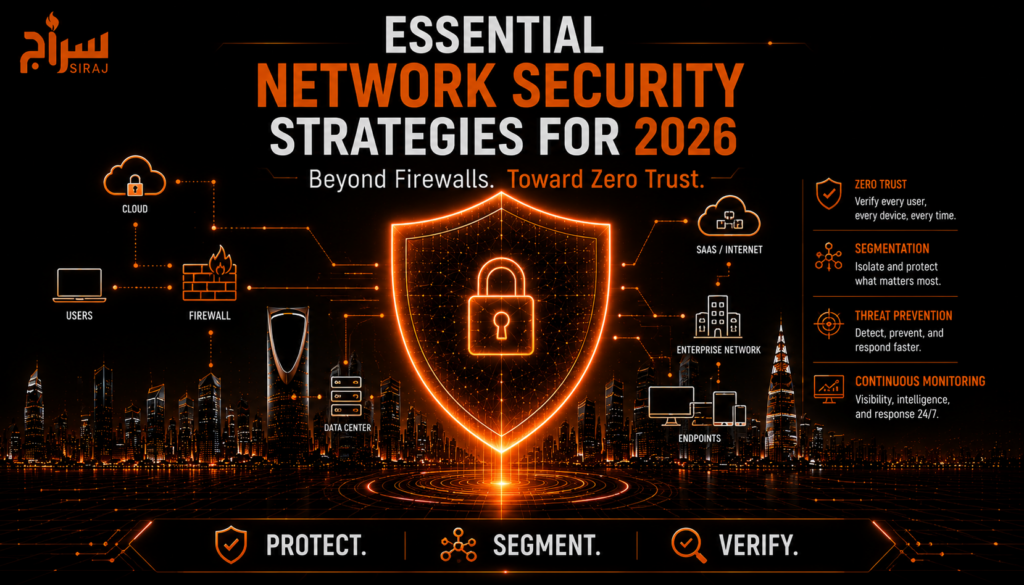
The Perimeter Isn’t Where It Used to Be
When employees connect from home, contractors access systems from their own laptops, and half your applications run in the cloud rather than on-premises, “inside the firewall” stops meaning “trusted.” A network security strategy built only around a strong edge firewall leaves everything behind that firewall exposed the moment any single credential, device, or cloud misconfiguration is compromised — because once an attacker is “inside,” there’s often nothing stopping them from moving freely.
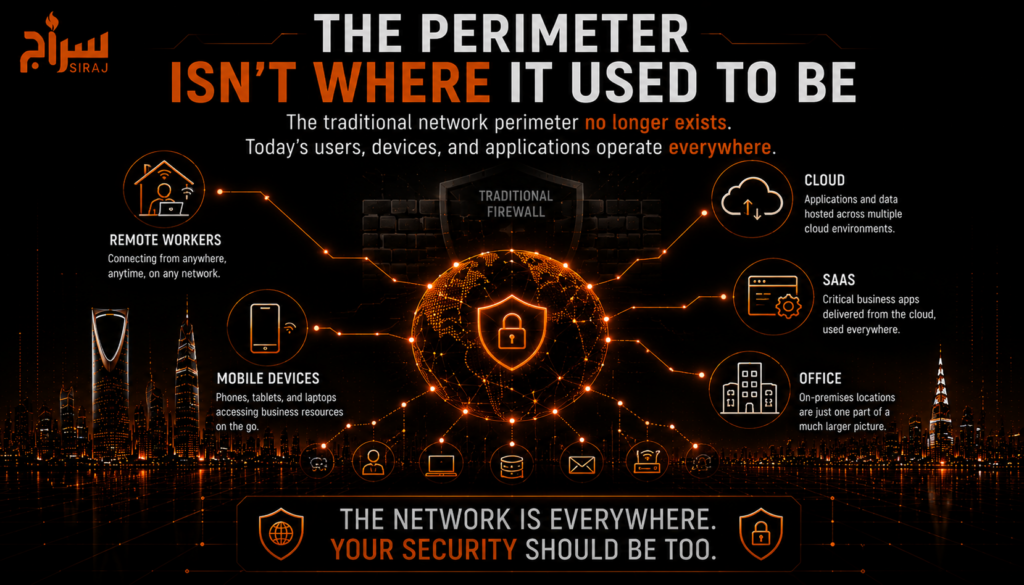
Zero Trust: Assume Breach, Verify Everything
As NIST https://www.nist.gov frames it, Zero Trust isn’t a specific product — it’s an architectural principle: never trust a request based on where it comes from (inside the network vs. outside); verify every request based on identity, device health, and context, every time. In practice, this means:
– **Identity becomes the real perimeter.** Every access request — to an application, a file share, a database — is authenticated and authorized on its own merits, not because it originated from “inside the office network.”
– **Device posture matters as much as user identity.** A valid username and password from an unpatched, unmanaged personal laptop is a different risk than the same credentials from a company-managed, compliant device — Zero Trust architectures check both.
– **Least-privilege access by default.** Users and systems get exactly the access they need for their specific role, not broad network-level access “just in case.”
Network Segmentation: Containing the Blast Radius
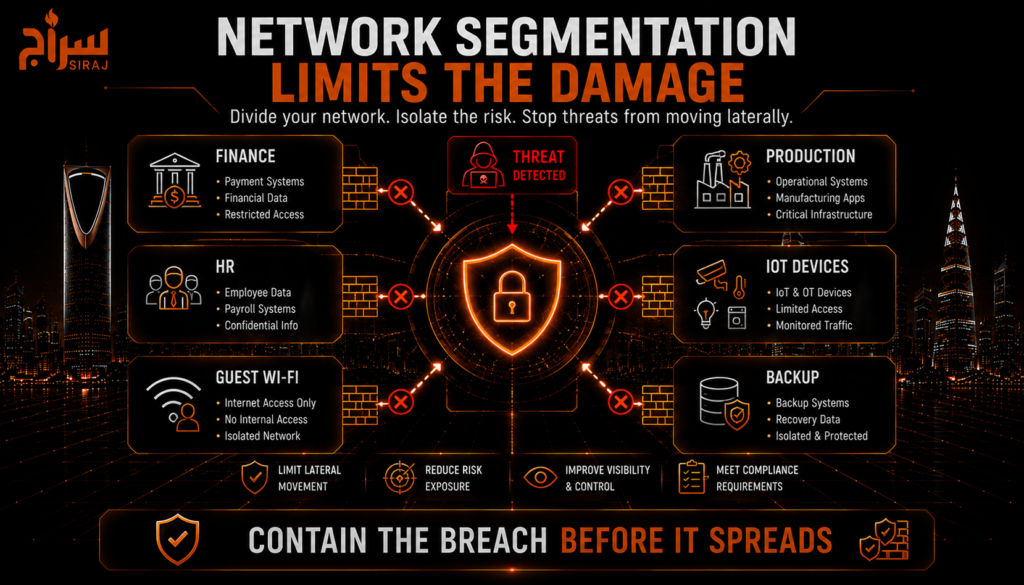
If Zero Trust addresses *who* can access *what*, segmentation addresses *what happens once something goes wrong*. A flat network — where every device can, in principle, reach every other device — turns a single compromised workstation into a potential foothold across the entire organization. Segmentation breaks the network into isolated zones (finance systems, guest Wi-Fi, IoT devices, production servers, general staff workstations) so that a breach in one zone doesn’t automatically become a breach everywhere.
Practical segmentation priorities for most Saudi SMEs:
– **Isolate guest and IoT traffic** from the core business network entirely — a compromised smart camera or guest laptop should never be a stepping stone to your finance systems.
– **Separate finance, HR, and other sensitive-data systems** into their own segment with tighter access controls and monitoring.
– **Isolate backup infrastructure** from the general network — this is specifically what stops ransomware from encrypting your recovery path along with everything else (see our dedicated guide on ransomware recovery for why this single control matters more than almost any other).
Advanced Threat Prevention: Beyond Signature-Based Detection
Older security tools rely heavily on signature matching — recognizing known malware by its digital fingerprint. That approach is structurally blind to anything new. Modern threat prevention layers in:
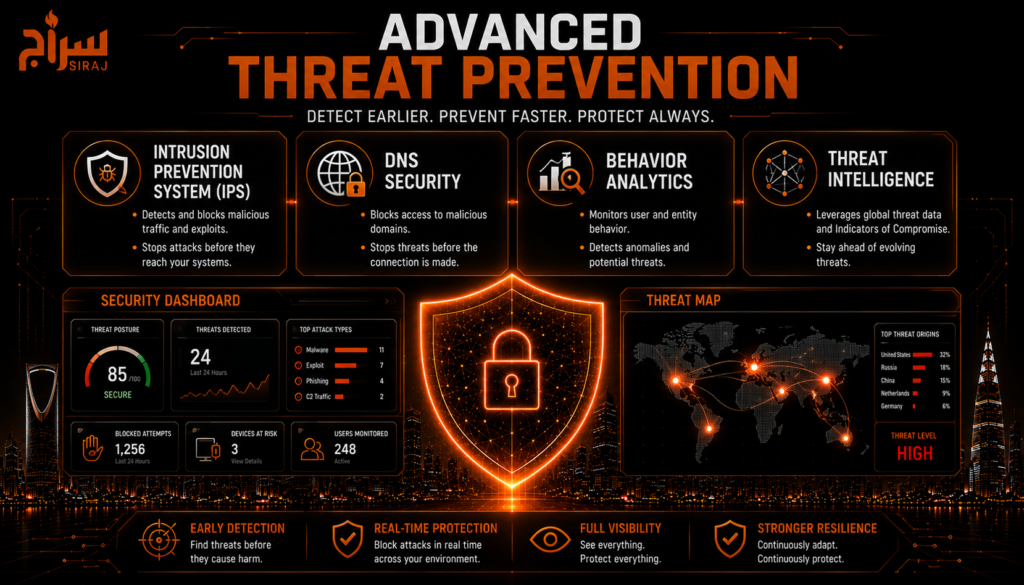
– **Intrusion Prevention Systems (IPS)** that catch attack *patterns and behavior*, not just known-bad files
– **DNS-layer filtering** that blocks connections to malicious domains before a request even reaches them
– **Behavioral anomaly detection** that flags unusual patterns — a workstation suddenly transferring large volumes of data at 3 AM, for instance — even when no specific malware signature matches
Putting It Together: A Practical 2026 Checklist
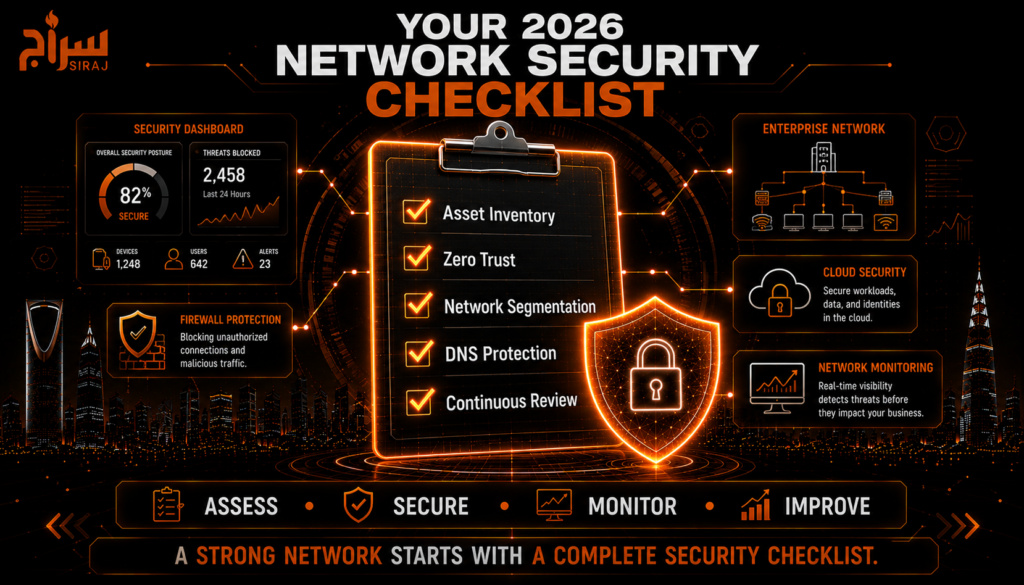
1. **Map what you actually have** — most organizations underestimate how many devices, cloud services, and access points exist on their network. You can’t segment or protect what you haven’t inventoried.
2. **Segment by risk and function**, prioritizing isolation of backups, finance systems, and any IoT/guest traffic first — these are the highest-leverage, lowest-effort wins.
3. **Move toward Zero Trust incrementally** — starting with MFA and Conditional Access on your most sensitive systems, rather than attempting a full architectural overhaul overnight.
4. **Layer in behavioral and DNS-level threat prevention**, not just a firewall and antivirus.
5. **Review and test the whole setup regularly** — network security that was correctly configured a year ago and never revisited afterward is not the same as network security today.
Why This Matters Beyond “Best Practice”
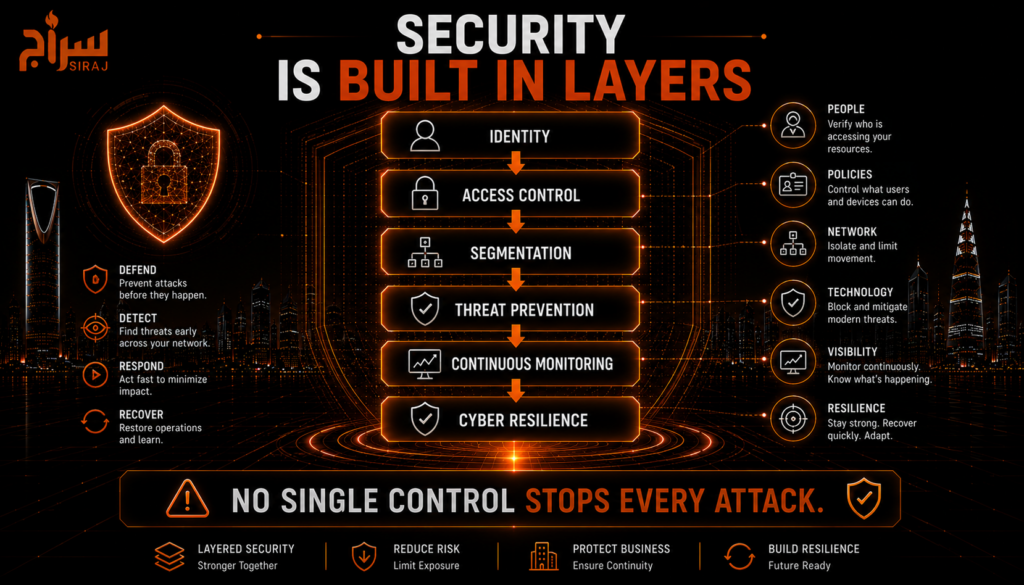
For Saudi businesses pursuing Aramco CCC certification or NCA ECC alignment, most of the above isn’t optional best practice — it’s evidence auditors will directly ask to see: segmented networks, documented access policies, active intrusion prevention. Building toward Zero Trust and proper segmentation isn’t just a security upgrade; it’s also compliance groundwork that pays for itself the moment your next audit comes around.
—
**Ready to modernize your network security architecture?** [Book a free network security assessment with SirajTech →](/contact)