AI in cybersecurity gets discussed in two very different registers: breathless vendor marketing promising an AI silver bullet, and equally breathless warnings about AI-powered attacks making everything hopeless. The honest picture is less dramatic and more useful — AI has made both attackers and defenders genuinely more capable over the past few years, and understanding specifically how changes what a Saudi business should actually prioritize.
What AI Actually Does Well in Defense
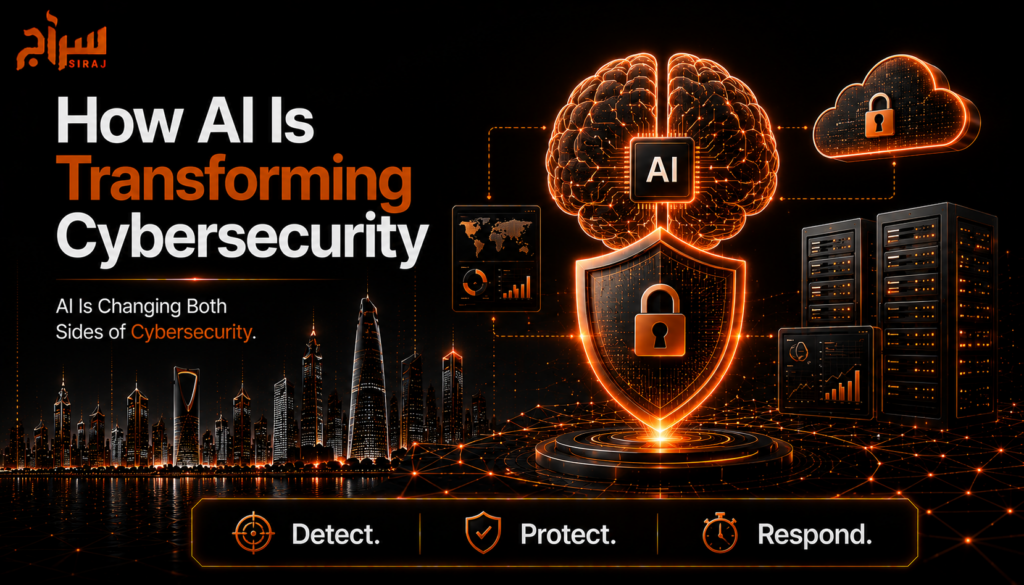
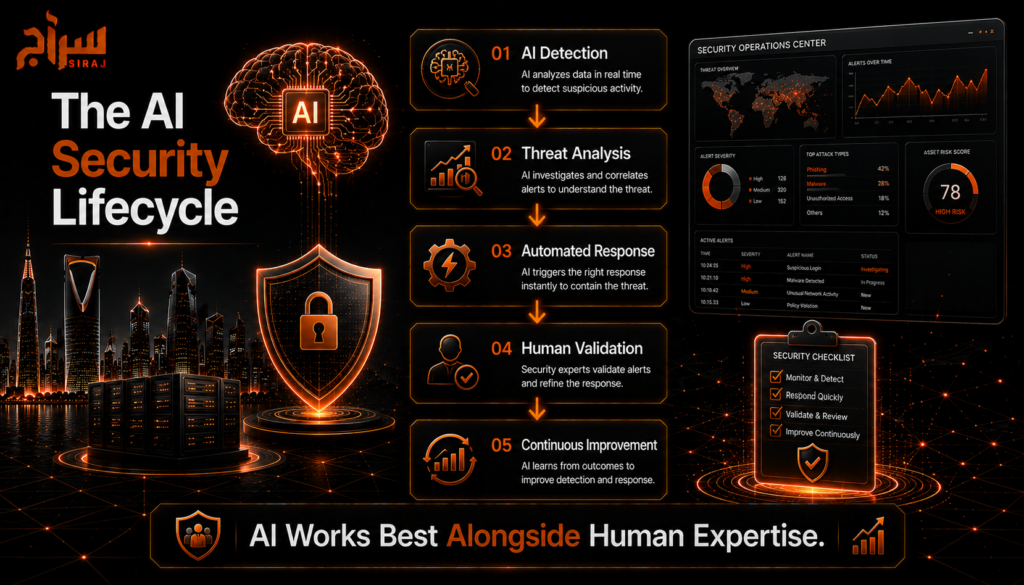
**Volume and speed of detection.** A modern network or endpoint generates far more log data than any human team can meaningfully review in real time — a gap threat-intelligence vendors like CrowdStrike https://www.crowdstrike.com build their entire detection approach around closing. AI-driven analytics excel specifically at this: continuously processing enormous volumes of activity and flagging genuinely anomalous patterns — a login at an unusual hour from an unusual location, a workstation suddenly communicating with an unfamiliar external server — far faster than manual log review ever could.
**Behavioral baselining.** Rather than only matching known-bad signatures (which is blind to anything new), AI-driven tools learn what “normal” looks like for a specific user, device, or system, and flag deviations from that baseline. This is specifically why modern endpoint detection and response (EDR) platforms catch novel threats that pure signature-based antivirus misses entirely.
**Automated, faster response.** Some AI-driven security platforms don’t just detect anomalies — they can automatically isolate an affected device from the network the moment a high-confidence threat is identified, buying critical minutes before a human analyst even reviews the alert. In an active ransomware scenario specifically, this speed difference can be the difference between one encrypted workstation and an entire encrypted network.
What AI Has Changed on the Attacker’s Side
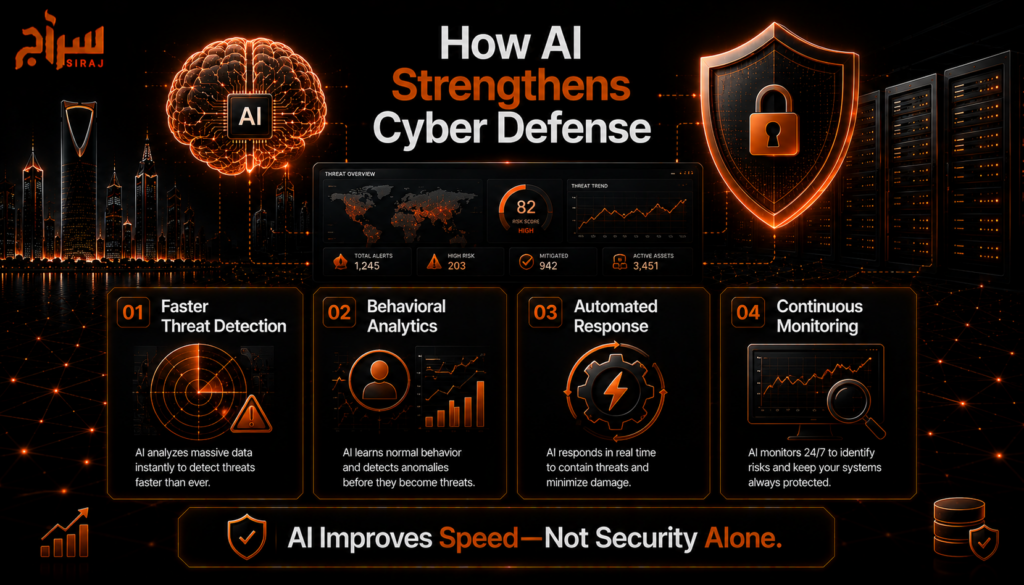
**More convincing phishing and social engineering.** AI-generated text no longer carries the awkward phrasing and grammatical tells that used to help identify phishing attempts — a generative AI tool can produce fluent, contextually appropriate emails in any language, including Arabic, at essentially zero marginal cost per attempt. This directly raises the bar for what “obviously suspicious” looks like, and is a real factor behind the growing sophistication of Business Email Compromise attempts (see our dedicated BEC guide for the specific defenses that still work regardless of how convincing the email itself becomes).
**Voice and video deepfakes.** Executive impersonation has moved beyond spoofed emails into cloned voices and, increasingly, video — meaning “I heard the CEO’s voice on the phone” is no longer reliable verification on its own. This is precisely why callback verification using an independently retrieved phone number, not one supplied in the request itself, matters more now than it did even a few years ago.
**Automated vulnerability discovery.** AI-assisted tools can scan code and infrastructure for exploitable weaknesses faster than manual review, which cuts both ways — legitimate security teams use the same capability defensively, but it also lowers the skill floor for attackers probing for exploitable gaps at scale.
What This Means Practically for a Saudi Business
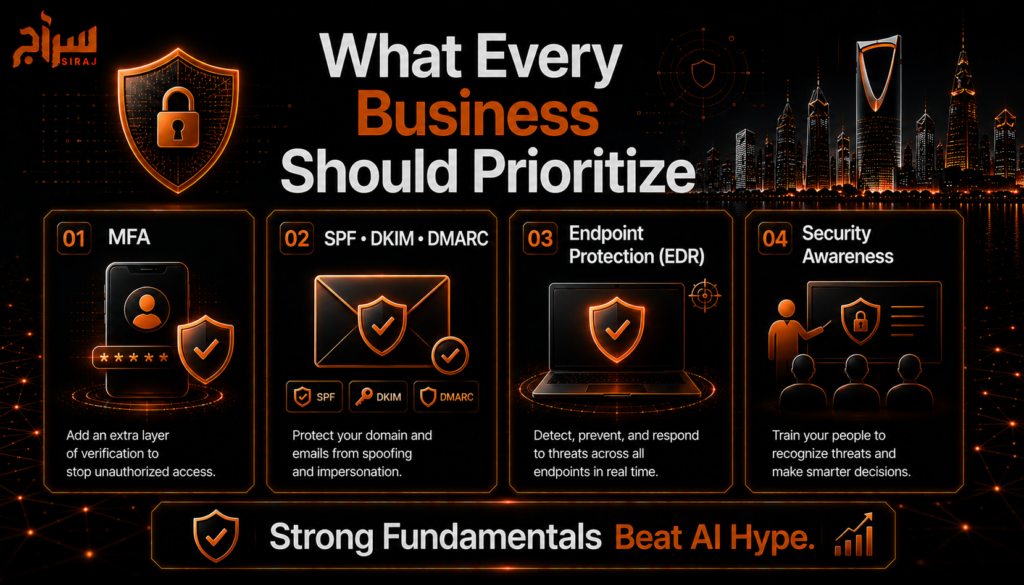
The honest takeaway isn’t “buy an AI security product” — it’s that the *fundamentals* now matter more, not less, because AI has closed some of the gaps attackers used to need real skill to exploit:
– **Email authentication (SPF, DKIM, DMARC) and anti-impersonation controls** matter more when the phishing emails themselves are harder to spot on content alone.
– **Callback verification for any payment or credential-sensitive request** matters more when voice and video can no longer be trusted as sole verification.
– **Behavioral-detection-capable endpoint protection** (rather than pure signature-based antivirus) is now a meaningfully more important baseline than it was a few years ago.
– **Staff awareness training** needs to specifically address AI-generated phishing and deepfake-based impersonation, not just the older, more obviously flawed scam patterns.
A Note on AI Governance
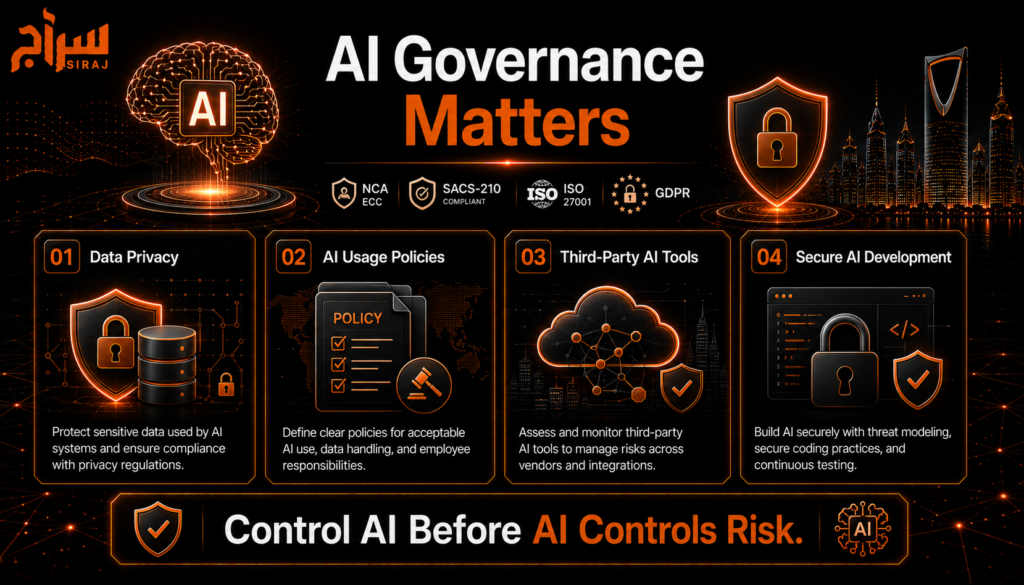
As businesses adopt AI tools internally — chatbots, AI-assisted analytics, AI coding assistants — a genuinely current cybersecurity posture also needs to account for the *new* risks these tools introduce: what data gets shared with third-party AI services, whether staff are pasting sensitive information into public AI tools without realizing the data leaves the organization’s control, and whether AI-generated code or content gets reviewed with the same scrutiny as human-created work before deployment. This is an emerging area of governance most Saudi SMEs haven’t yet formalized policy around — worth addressing proactively rather than after an incident forces the question.
The Balanced View
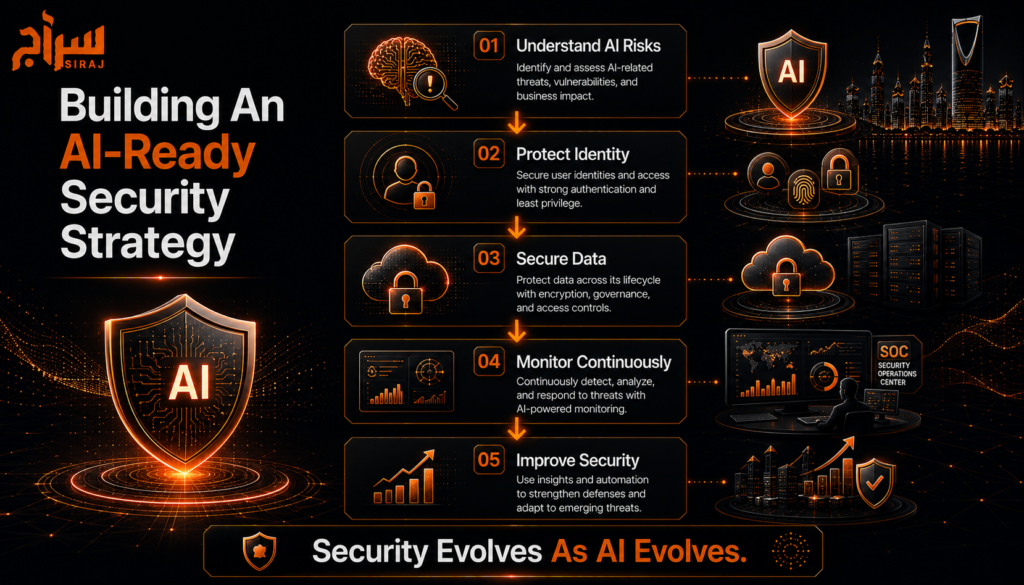
AI hasn’t made cybersecurity a fundamentally different game — it has raised the speed and sophistication on both sides simultaneously. For a Saudi business, that means the fundamentals (MFA, email authentication, staff awareness, tested backups, monitored endpoints) matter as much as ever, while the specific threats those fundamentals need to defend against have become faster and more convincing. Businesses that keep their foundational controls current, rather than chasing AI-branded point solutions, remain the best-positioned regardless of how the threat landscape continues to evolve.
—
**Want your security program built around what actually works against modern, AI-assisted threats?** [Book a free security assessment with SirajTech →](/contact)